Outdoor play equipment
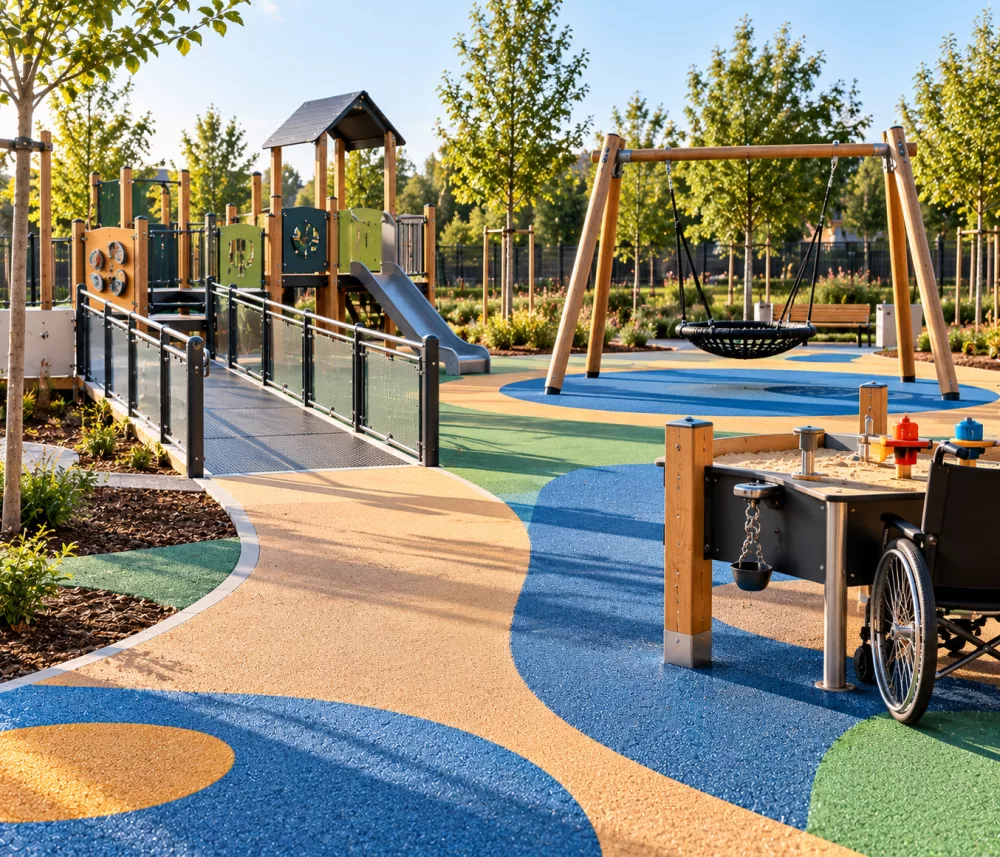
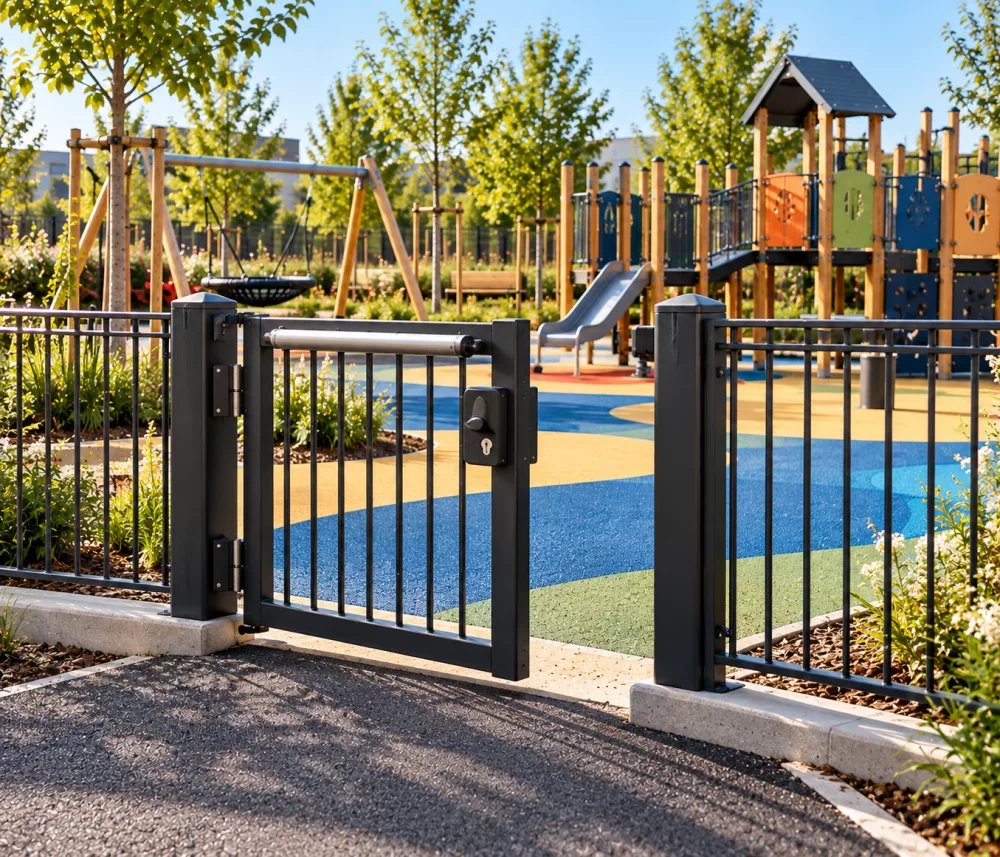
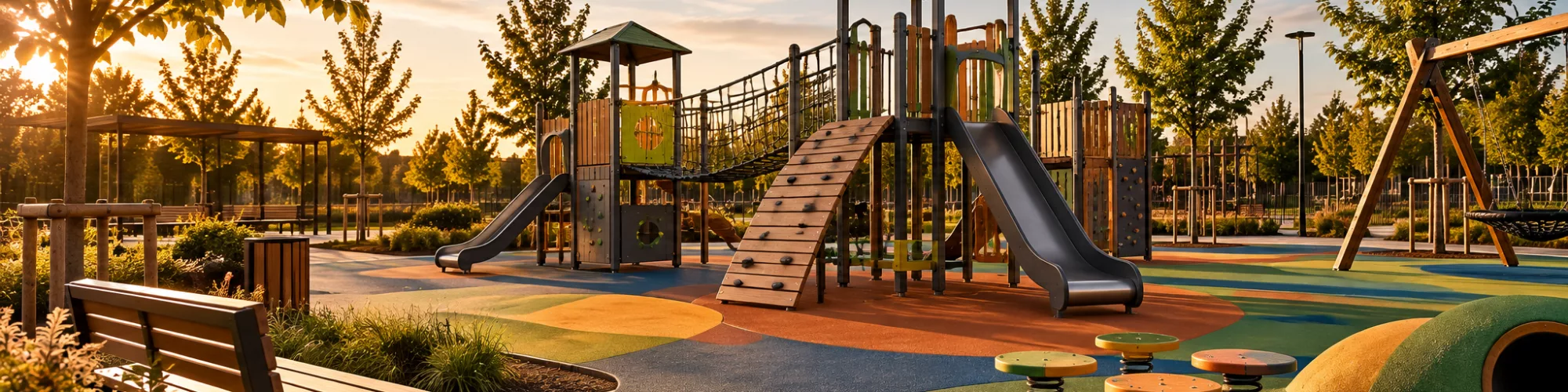
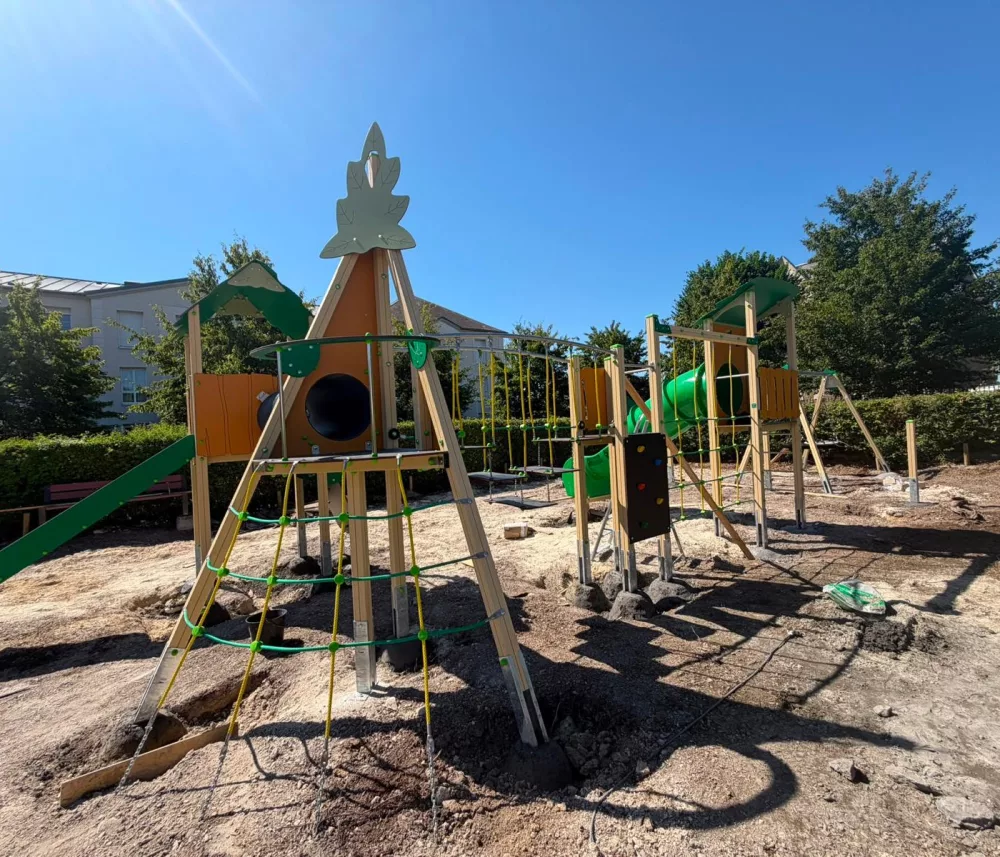
Outdoor play equipment is chosen first by age group, and it is a subtler exercise than it looks. A playground for 2-6 year-olds needs low heights, gradual access, seating and imaginative play; one for 6-12 year-olds needs height, climbing, swinging and managed risk. Mixing the two without physical separation produces a playground where the small get knocked over and the older ones are bored.
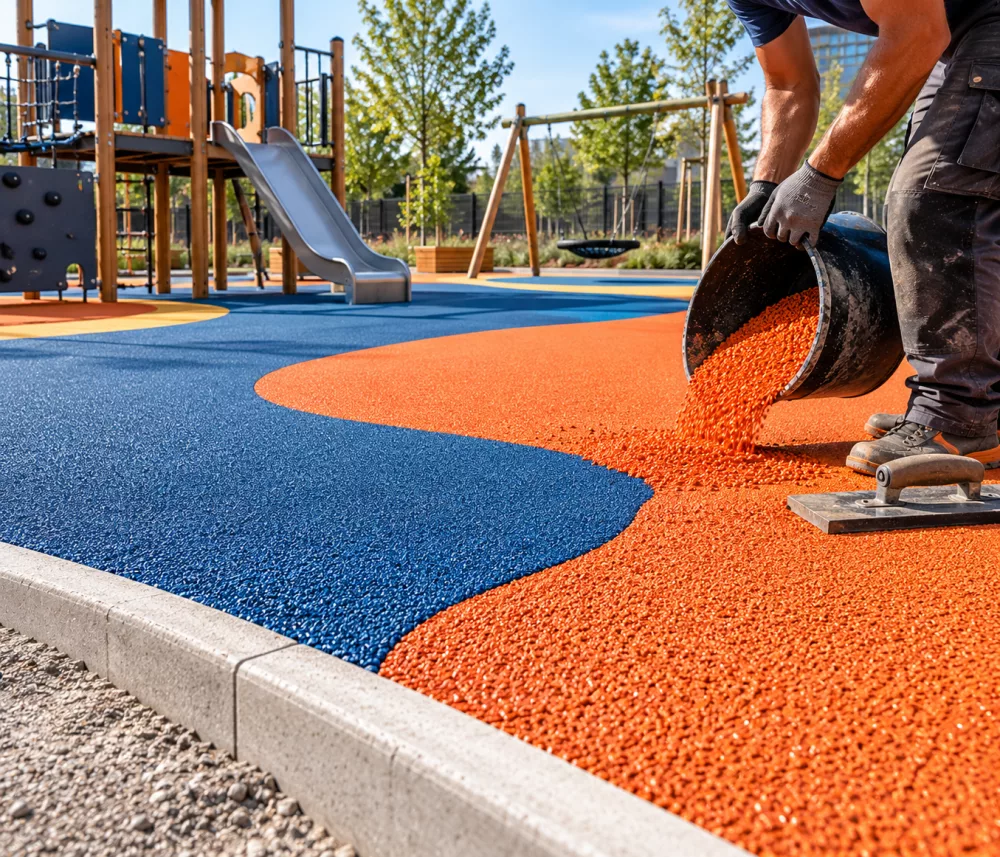
Free fall height is the figure that governs everything else: it determines the extent of the impact area, the thickness of the safety surfacing and, in turn, a large part of the budget. Equipment topping out at 1.50 metres and equipment at 2.50 metres do not cost the same once the surfacing is counted - a point catalogue comparisons systematically hide.
We work with certified equipment and with bespoke design, depending on the project. Bespoke comes into its own where the plot is constrained, where a local theme deserves telling, or where standard equipment does not sit well on a heritage site. See product design for that dimension.
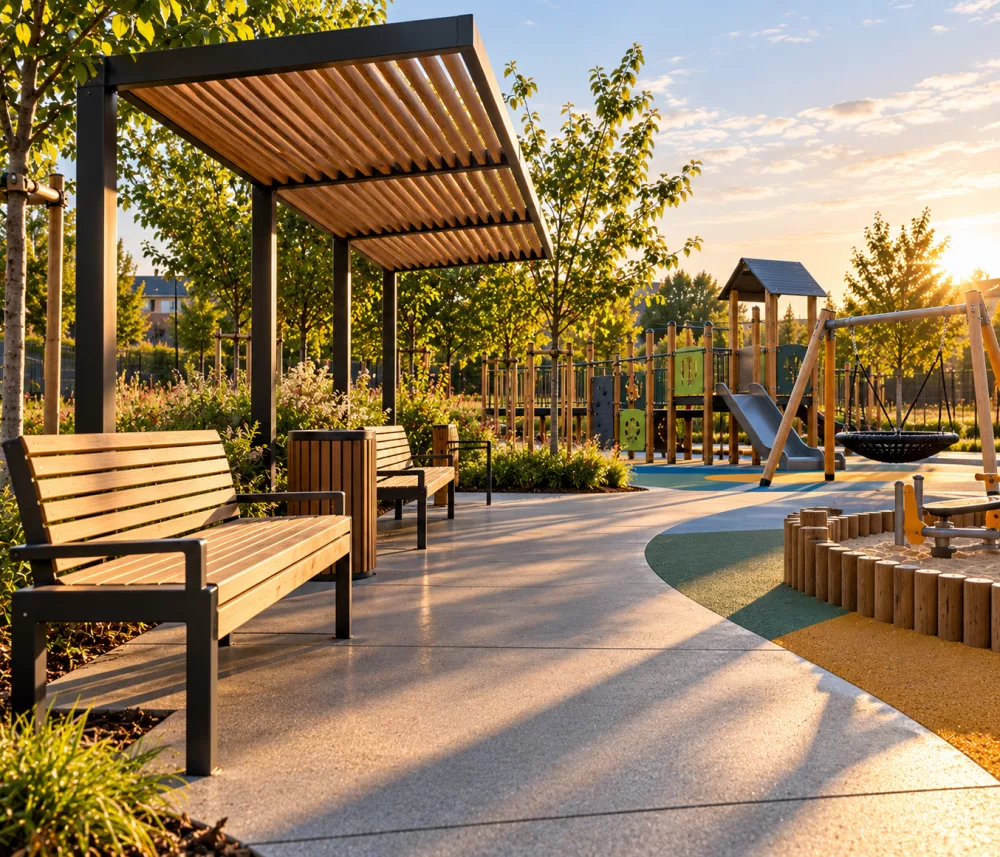
On materials, timber needs regular upkeep and ages visibly but suits any setting; steel and composite need less maintenance and take intensive urban use better. We give you the ten-year upkeep cost of each option, because that is where the real difference lies, not in the purchase price.
On renewal, one mistake recurs endlessly: replacing an ageing item with a model of the same footprint but greater height, because it is more attractive. The impact area and the surfacing thickness then have to be redone, which was not budgeted for, and the playground stays closed for months. We systematically check the free fall height of the replacement model before ordering, and tell you if it forces the surfacing to be redone.