Skip to content
Français Current language : English
Start my project
Product design

Services

Product design

The catalogue covers most of it. There is always one part that does not exist yet - that is the one we draw.

Services

Drawing what the catalogue does not carry

Projects rarely come unstuck over standard equipment. They come unstuck over a column in the wrong place, a four-metre-thirty clear height, a load-bearing wall that rules out the intended fixing, or a brand identity to hold all the way down to the machine covers. That is where product design takes over from space design.

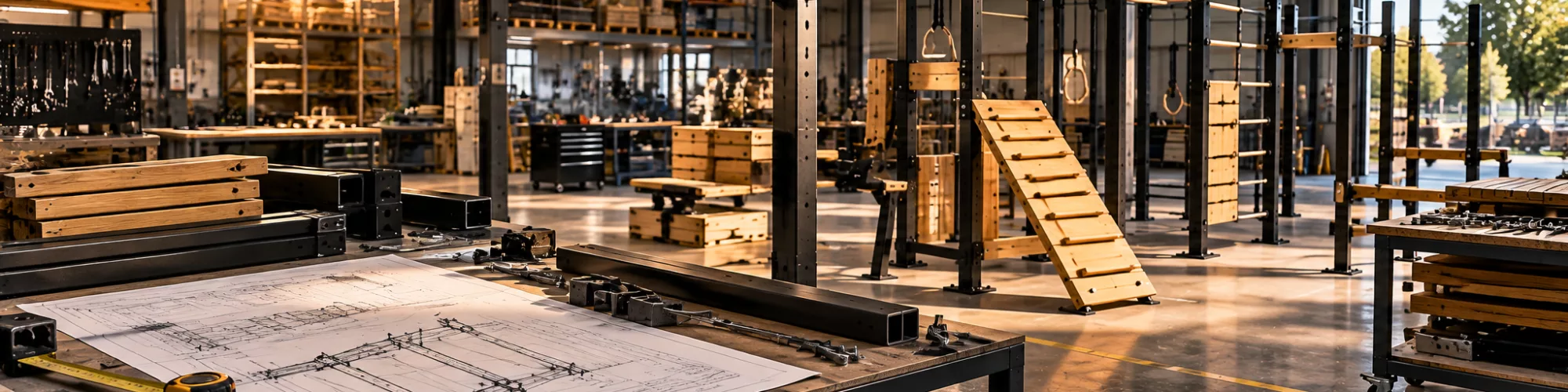
We draw the part from the constraint: survey, sketch, material selection, load calculations, dimensioned manufacturing drawing. Structures, apparatus, furniture, storage, cladding - every bespoke element is designed to be manufactured, transported, assembled and, one day, taken apart again.

Made to measure is not a luxury. It is what lets professional fitness equipment go into a volume that was never meant for it, and stay there. A well-drawn part can be repaired, extended and moved; a forced one has to be replaced.

The drawing stops when the part can actually be built: available stock, realistic joints, workable tolerances, a weight the site's lifting gear can handle. That is what separates a handsome image from a manufacturing drawing.

World by world

What that covers, discipline by discipline

Padel

Padel

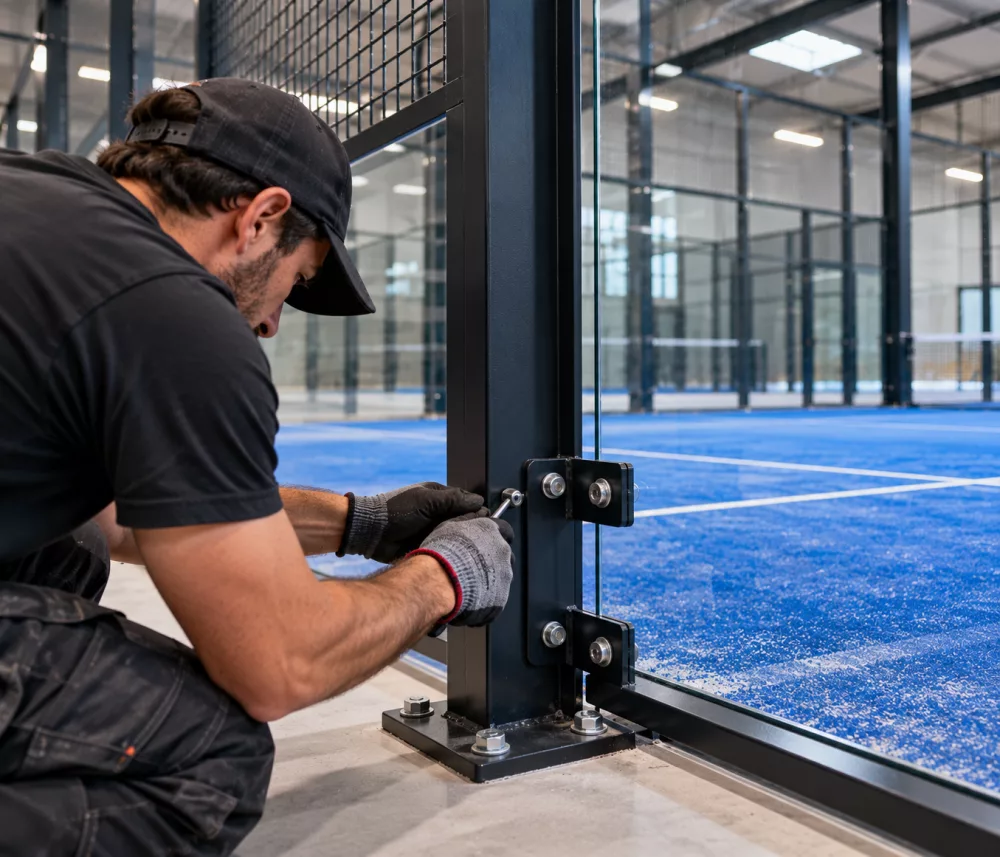
A padel structure matched to the building's grid, padel court glazing and fixings drawn for the span available, cladding and ball-stop panels in the club's colours.

A structure drawn to the building's grid avoids strengthening the roof, which almost always costs more than the bespoke part it replaces.

Explore Racket sports
Fitness & Cross-training

Fitness & Cross-training

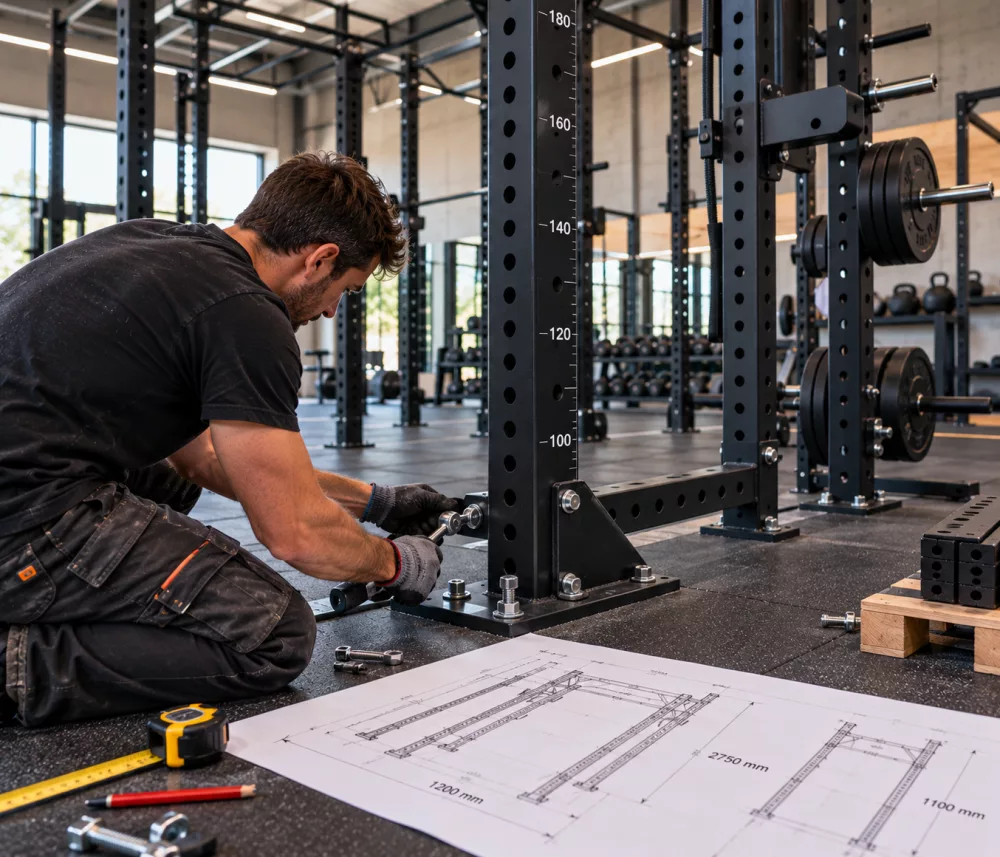
Bespoke strength training floors: racks, rigs and storage drawn to the real height of the room. Cross-training equipment and anchors adapted when the slab or the roof structure sets the rules.

A rack drawn to the dimensions of the room beats a catalogue rack set at an angle, and it is often cheaper than people think once the lost square metres are counted.

Explore Fitness & Cross-training
Pilates

Pilates

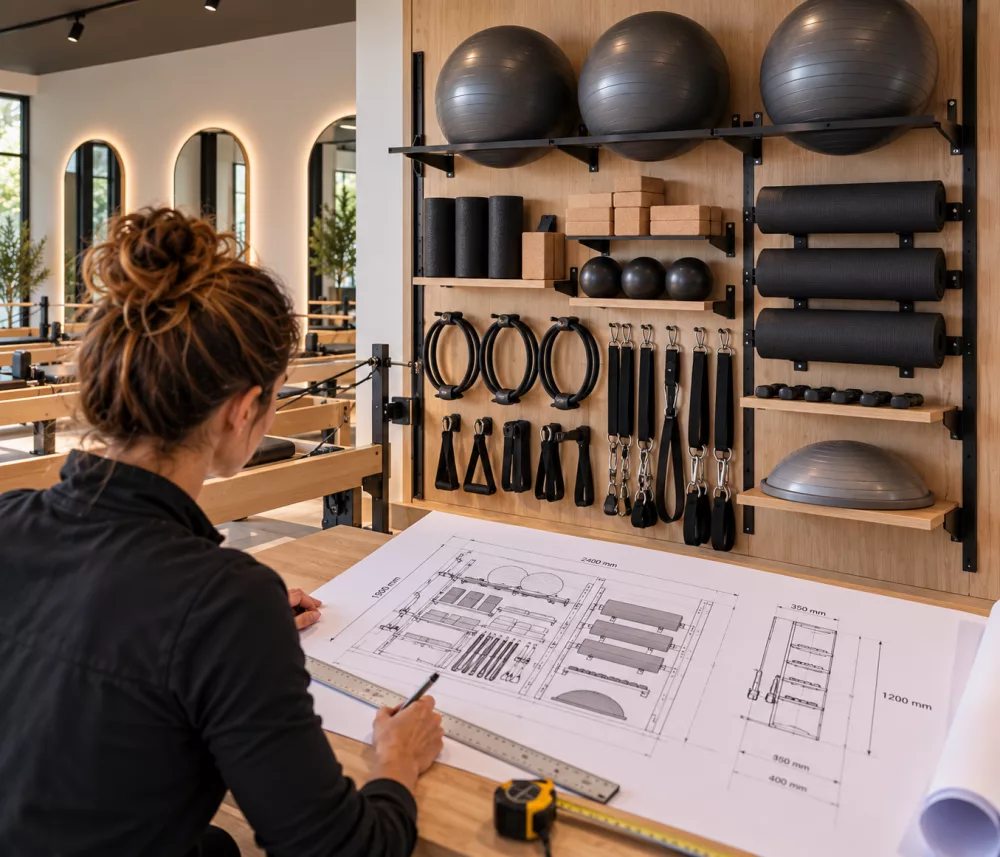
Pilates reformers and professional pilates equipment built into the studio: wall supports, small-equipment storage, finishes chosen for a room people look at closely.

Heights and depths are drawn for the actual equipment, not for an average volume: that is precisely what a catalogue unit cannot do.

Explore Fitness & Cross-training
Combat sports

Combat sports

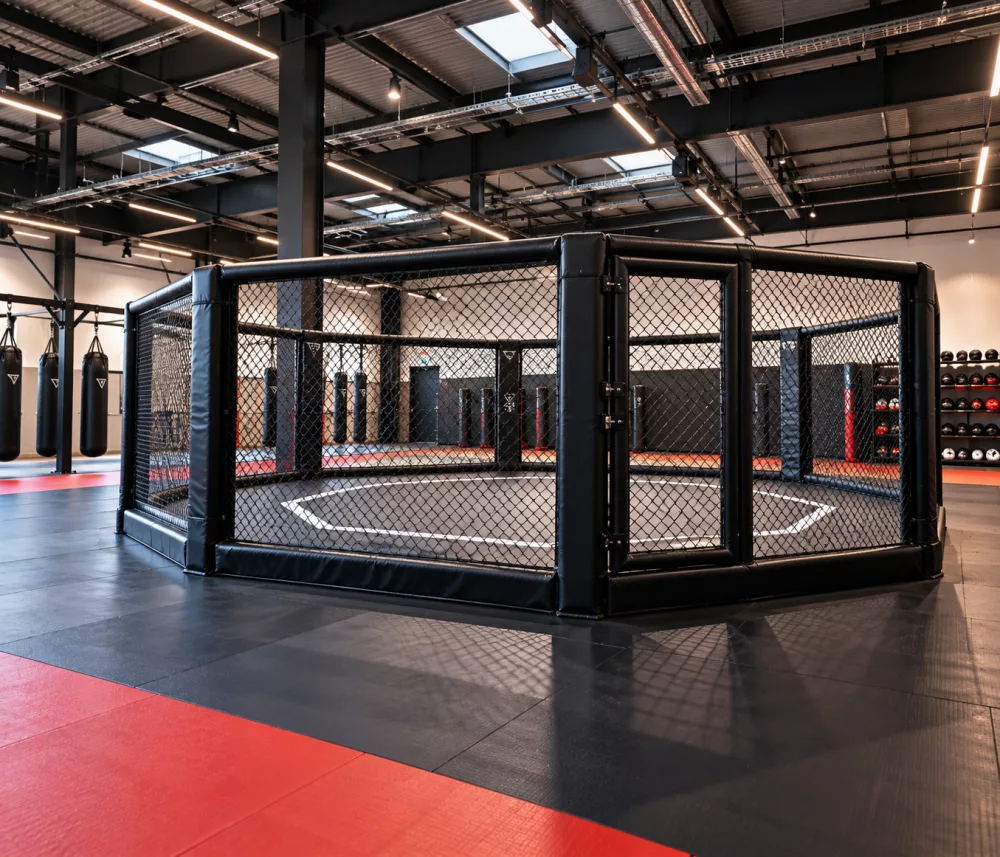
An MMA cage sized to the platform, a free-standing boxing ring where floor anchoring is impossible, MMA wall padding and puzzle mats cut to the room.

A catalogue-diameter cage leaves forty centimetres between itself and the wall: drawn to size, you recover a usable clearance without touching the floor area.

Explore Combat sports
Multi-sport spaces

Multi-sport spaces

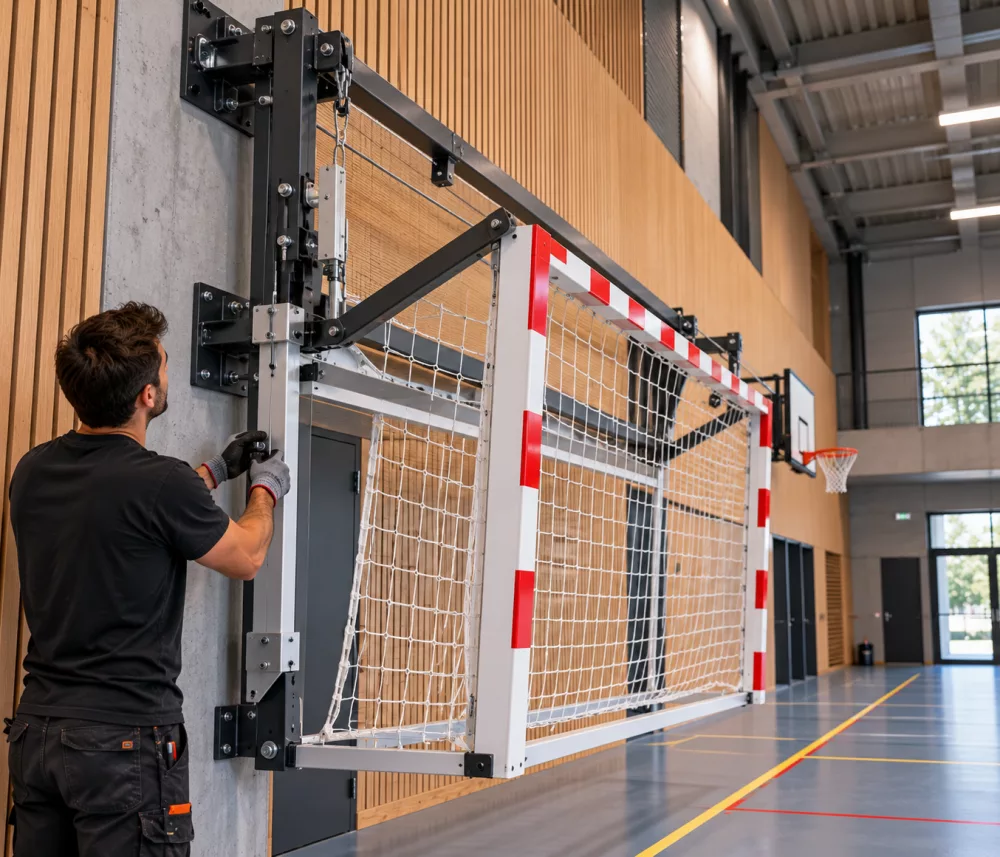
Sports hall structures, retractable goals and hoops, wall padding and mobile storage: enough to move from one practice to the next without stripping the room.

The parts of a sports hall take repeated impacts unsupervised: it is the fixings and the pivot points that have to be sized, not the sheet metal.

Explore Multi-sports spaces
Play areas

Play areas

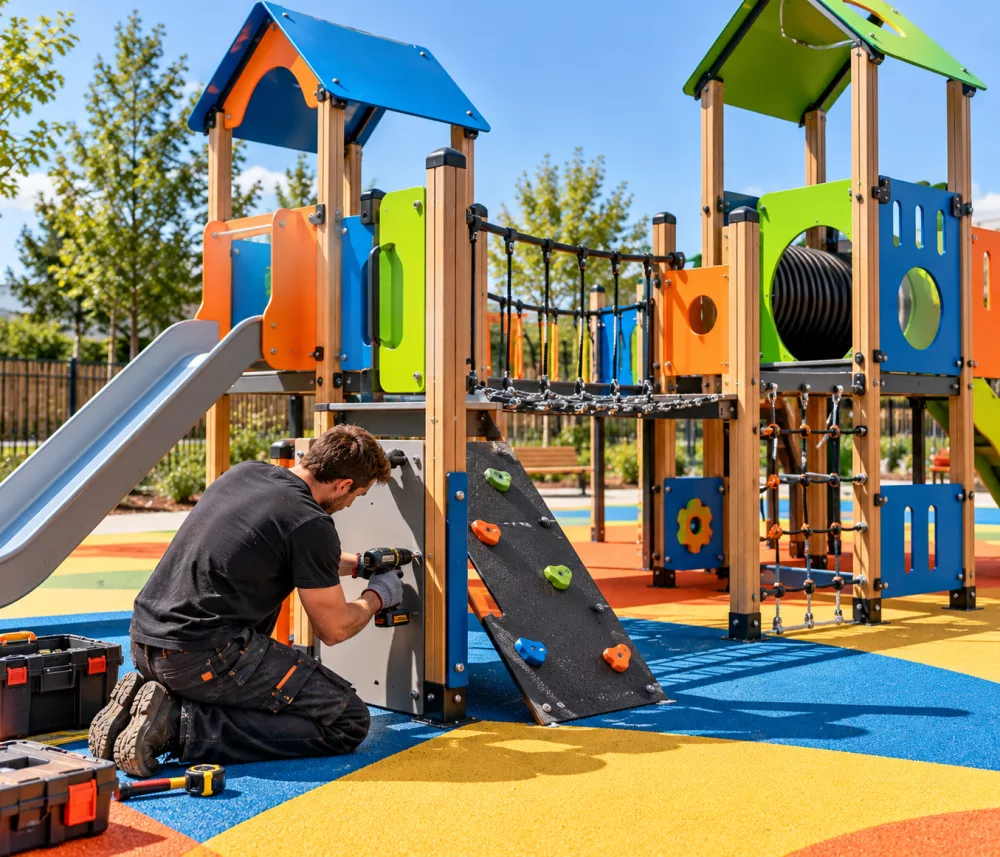
Playground furniture drawn around the theme of the site, equipment matched to the age groups served, seating and shelter for the adults with them.

The theme of the place changes nothing about fall heights or gaps: the part is drawn for the standard first and for the look second.

Explore Play areas

Good to know

Frequently asked questions

Does a bespoke part cost more?

Less often than people think, and almost never once you count the square metres a badly sized catalogue item loses.

It costs more per unit and less per usable square metre: that is the right angle for comparing two proposals.

How long from drawing to delivery?

Four to eight weeks between sign-off of the drawing and delivery, depending on complexity and surface treatments.

It is a long-lead item: we commit it first in the programme, before the shell is even finished.

Do bespoke parts meet the standards?

They fall under the same requirements as catalogue items - and we treat them as such: anchor sizing, surface finish, gaps. A drawn part is not an exempt part.

On playgrounds, where the standard is strictest, it is the standard that draws the part before the theme of the place does.

Describe the constraint

A dimension that will not fall right, an awkward volume, a finish to match: those are the best starting points. Send us the drawing or a photograph and we will tell you what can be made of it.

Talk about my project