Racket sports
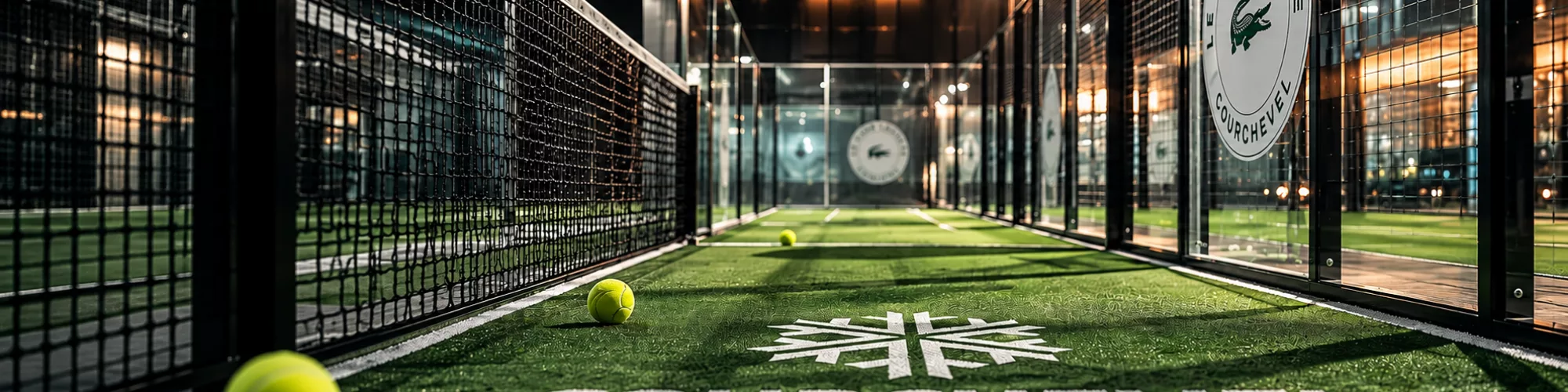
Padel, tennis, squash, badminton: four sports, four geometries, four surfaces. We design, manufacture, install and maintain the courts - indoors and out.
Explore this world
Our worlds
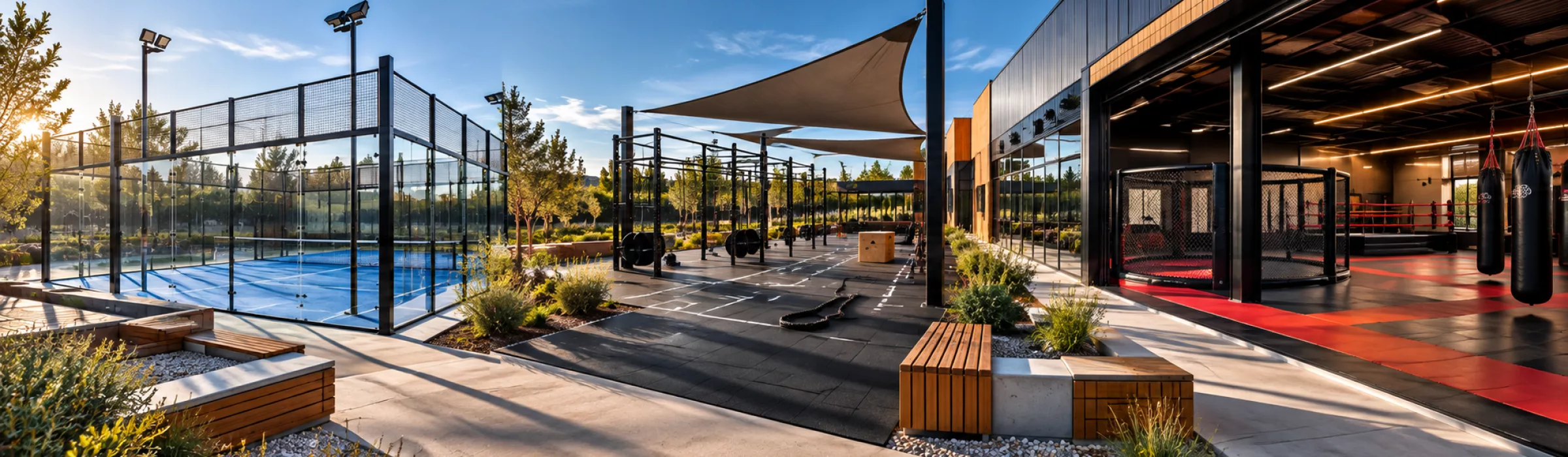
Every practice has its constraints: a ceiling height, a floor, an acoustic, a standard. We know them, and we design the space around them.
Our worlds
A padel court, a weights floor and a playground have almost nothing in common. The first is a question of structure and lighting, the second of permissible loading and circulation, the third of fall height and standards. Filing them together under sports equipment gives you a catalogue; separating them into five worlds gives you five ways of asking the right questions at the first meeting.
That division structures the whole site, and it is not a commercial one: it follows what actually decides a project. Racket sports turn on structure, turf and light. Fitness and cross-training on the floor, the height and the acoustics. Combat sports on surfacing and suspensions. Multi-sports spaces on arbitrating between uses that contradict each other. Playgrounds on fall height and the surface that absorbs it.
A world is not a sport but a family of practices that call for the same technical answers. Padel, tennis, squash and badminton share enough constraints to live together; pilates sits with fitness because that is where it is dealt with in a club, not because it resembles it. Each world therefore has its sub-sections, and each sub-section its detail.
What does not change from one world to the next is the method. A survey of the premises before any pricing, a design that starts from how the place will be run rather than from a standard layout, workshop manufacture for what the catalogue does not cover, installation by our own teams and a written follow-up afterwards. Those are our seven trades, and they apply to all five families.
A project almost always spans more than one world. A padel club adds a conditioning floor; a sports hall hosts cross-training outside school hours; a combat gym shares its building with a studio. That is precisely the point of having all five under one roof: nobody passes you from one supplier to another when a use spills over into its neighbour.
If you are not sure which family your project belongs to, take the nearest entry: the pages answer each other, and our projects show work from each. At worst, tell us the premises and the activity - that is what we ask for first in any case.
World by world
Padel, tennis, squash, badminton: four sports, four geometries, four surfaces. We design, manufacture, install and maintain the courts - indoors and out.
Explore this world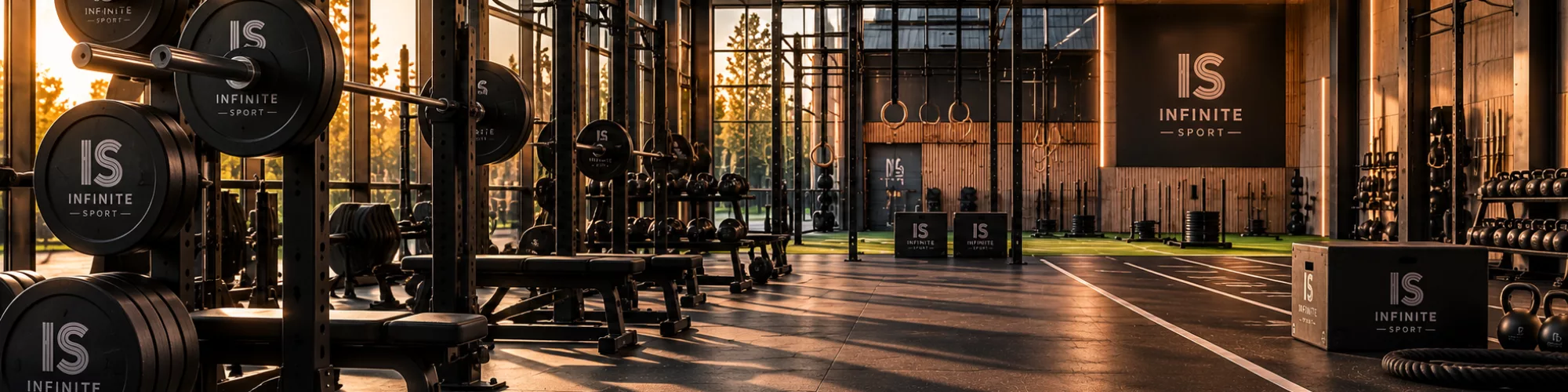
Weights floors, cross-training areas, pilates studios: three uses that call for neither the same floor, nor the same height, nor the same acoustics. We handle them together.
Explore this world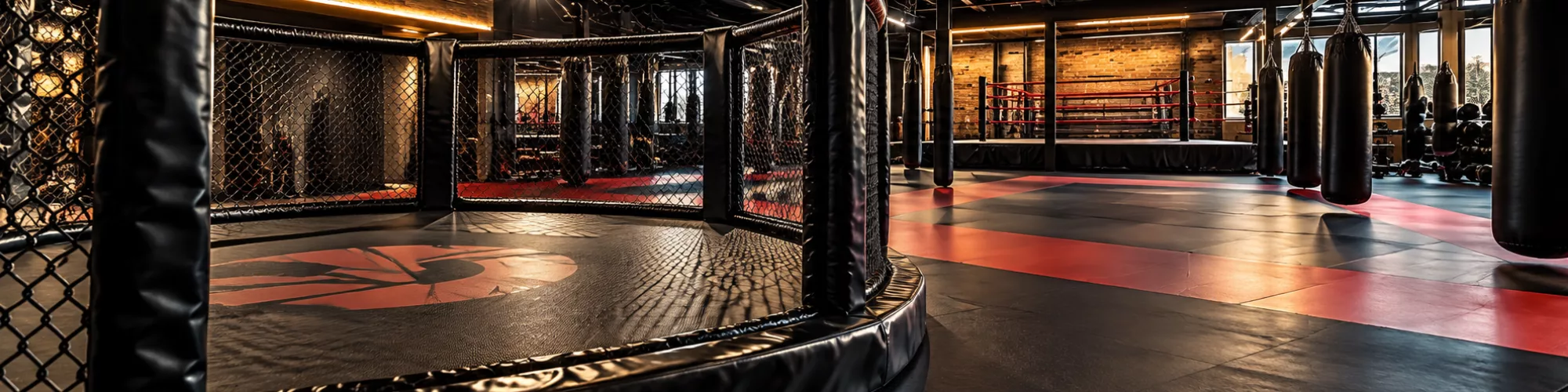
Boxing, MMA, judo, BJJ, karate, taekwondo, kickboxing, wrestling: eight disciplines, eight relationships to the floor and to space. We design, build and install the gyms that suit them.
Explore this world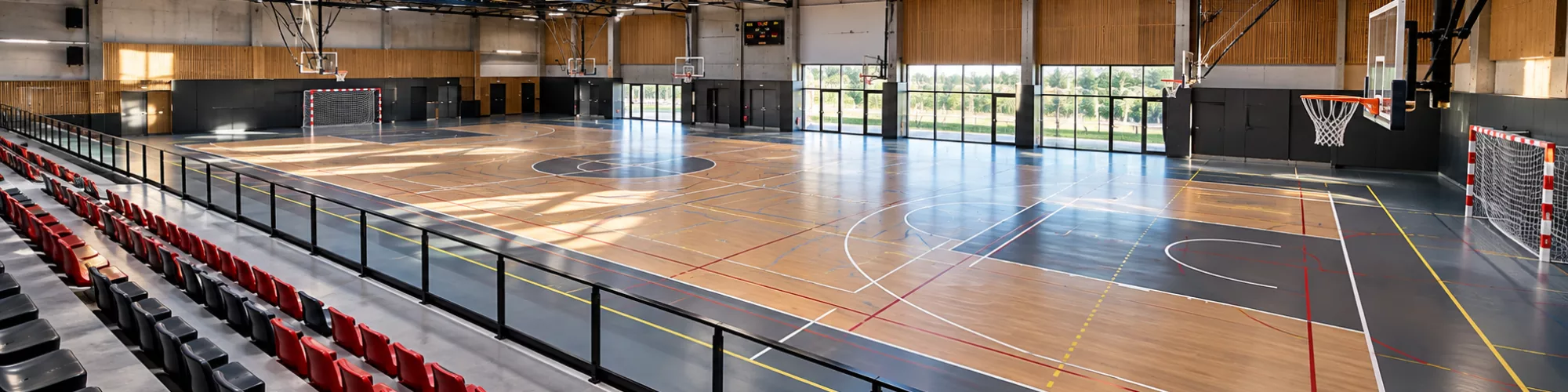
Sports halls, multi-use halls, outdoor games areas: one place, several sports, and as many contradictory demands to reconcile.
Explore this world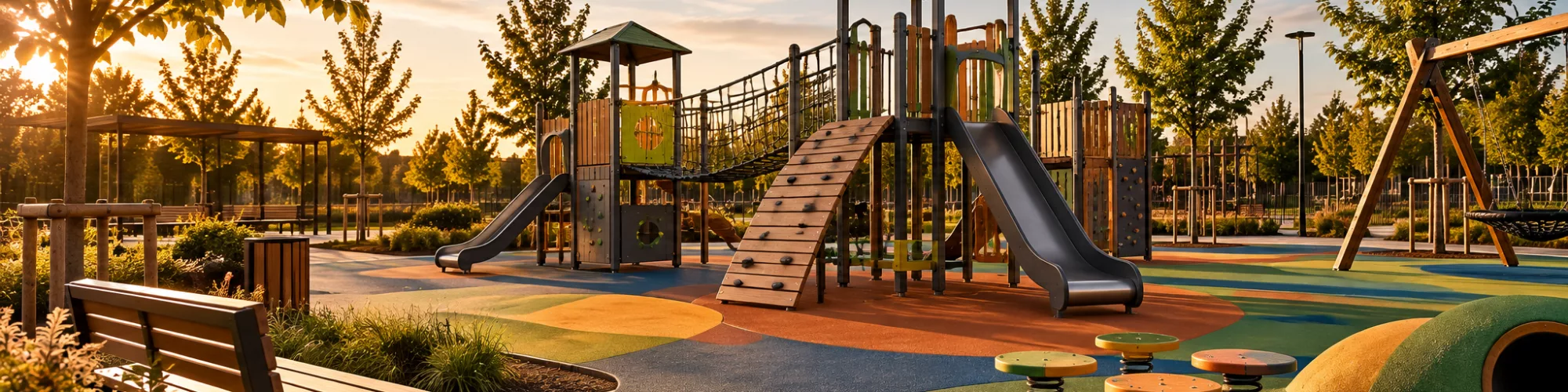
Spaces designed for children, and for those who bring them: play equipment, safety surfacing, furniture and fencing, from study through to periodic inspection.
Explore this worldGood to know
With the one carrying the heaviest constraint, which is almost always the one that governs the floor, the height or the structure. The rest organises itself around it.
That is the work we do at the survey: establishing which use imposes its law on the building, and which ones adapt.
We do the sports fit-out: design, manufacture of bespoke parts, supply and installation. The building trades - electrics, ventilation, partitions, structure - are handled by partner firms that we coordinate.
We tell you who does what at quotation stage, because that is what determines whom you call the day something goes wrong.
Yes, and a significant share of our playground and multi-sports work is public procurement.
The constraints there are different - tendering, deadlines set by the school year, periodic inspections to produce - and we treat them as such rather than as a private job with extra paperwork.
Regularly, and it is in fact most of what we are asked for. We survey what is there item by item and distinguish what is compliant, what can be refurbished and what has to go.
Keeping a non-compliant item to save money is the one trade-off we refuse.
A constraint, an unusual footprint, a practice that fits no box: describe it, and we will see what can be done.
Contact us